Short answer
If you run an independent barbershop on a UK high street in 2026, the rules of customer loyalty have quietly shifted. The same regulars still walk through the door every four weeks. The chain on the corner now runs a monthly cut subscription. And the loyalty stamp card behind your till is slowly losing the argument with their phone.
This is a practical, ordered playbook on improving loyalty in an independent barbershop — five concrete steps you can implement starting this month. None of them need a marketing agency. The fourth step is the leverage point: the move from price-led promotions to a paid monthly membership, which is what most independent barbers winning on loyalty in 2026 are actually doing.
Step 1 — Build the chair-side relationship
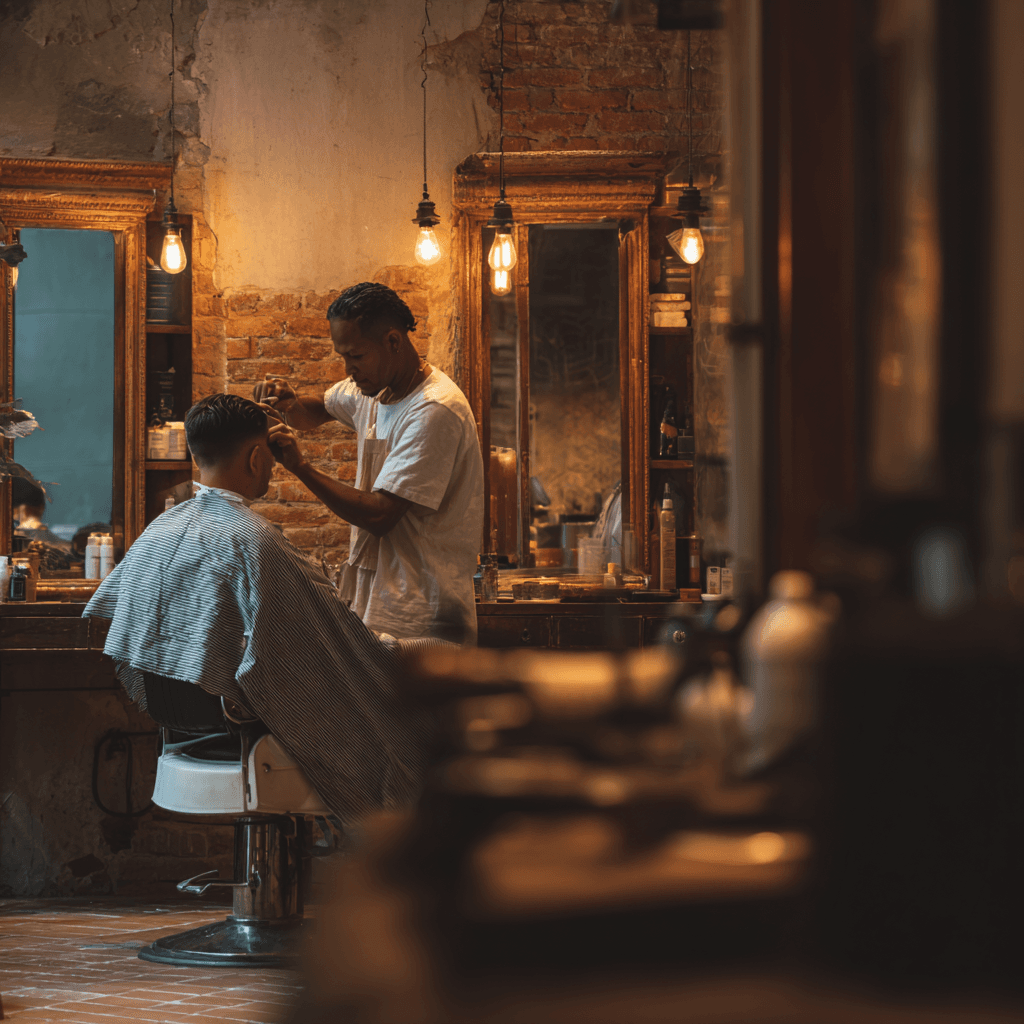
Loyalty in a barbershop is forged at the chair. Unlike most retail, the customer is sat in front of the same person for 25 minutes — the conversation is the product as much as the cut. The most loyal customers in any independent shop are loyal first to a barber who remembers their kids' names, the football team they support, and the job they were interviewing for last month.
The cheapest, highest-impact intervention in any independent barbershop is a 30-minute weekly huddle where staff trade notes on the people sat in their chairs. "The Wednesday teacher with the fade" becomes Sam, head of year nine, rugby on Saturdays. Sam, in turn, stops feeling anonymous, and the cost of trying the chain on the corner goes up.
This is unglamorous work and it doesn't scale, which is precisely why the chains can't replicate it. It is, structurally, your largest competitive advantage.
Step 2 — Make cuts consistent across stylists
Independent barbers obsess over the perfect fade. Loyal regulars don't want the perfect fade — they want the same cut, every visit. Consistency, not virtuosity, is what compounds loyalty.
Operationally: a written house style, a weekly cuts audit, juniors trained against the documented standard, and a one-page guide pinned in the back room. If a regular books with one barber and ends up with another because of a holiday, the cut should still be recognisable. The seam between barbers is exactly where retention leaks.
Step 3 — Book the next visit before the customer leaves the chair
Loyalty isn't a feeling. It's a booking rhythm. The strongest loyalty in any barbershop comes from being slotted into a regular four- or six-week cadence — a calendar event the customer no longer reconsiders.
The single highest-impact operational change is to offer the rebook while the cape is still on. "Same time, four weeks?" — phone in hand, calendar open. Once the visit is in the diary, it stops being a decision. That's the goal: take the next cut out of the customer's discretionary spend bucket and into their default behaviour.
Step 4 — Move from price promotions to a paid monthly membership
Price-led promotions train customers to wait. Discounting cuts during quiet periods fills the chair this week and erodes price perception forever. The discount becomes the price, and full-price cuts feel overpriced by comparison.
A paid monthly membership inverts the model. The customer pays £45 in advance for one full cut, one mid-month trim, a free beard oil, and priority on Saturdays. The shop earns revenue before the cape goes on. The customer has a strong reason to walk past the chain on their way to your door, and the relationship moves from transactional to structural.
This is the largest single change you can make to barbershop loyalty in 2026. We've covered the comparison in depth in membership vs loyalty and the maths behind it in pricing a membership.
Modern membership platforms — including PerkClub, which we build — handle the Stripe billing, the Apple/Google Wallet pass, the chair-side redemption, and the weekly bank payout end-to-end. There's no app for your customer to download and no hardware for you to buy. Most barbershops launch in under 30 minutes; see how setup works and the dedicated PerkClub for barbers page.
Step 5 — Build a referral loop with bring-a-friend perks
Once members exist, give them a perk that is structurally easier to share than to use alone. Barbershops doing this well have a bring-a-friend cut at half price, a cuts-for-kids gift card members can hand to a colleague, or a member-rate Father's Day voucher.
Members talk about your shop the same way they talk about their gym or their pub — they bring people. A small share of members generating referrals is a high-margin, low-cost growth channel that no price promotion can match.
Putting it together
Improving customer loyalty in an independent barbershop in 2026 is not one thing — it's five overlapping things. Relationships and consistency build the foundation. The booking rhythm anchors the behaviour. The membership turns the foundation into recurring revenue. The referral loop compounds the result. If filling the chairs is the bigger challenge, our guides on how to get more customers into your barbershop and how to get customers to come back cover the acquisition side.
Start with the membership move — it's the single biggest lever and it pulls the others with it. Use the calculator on our pricing page to see what 80 cut-and-trim members would do to your monthly revenue, then read how to launch a membership programme and how to convert your existing customers for the chair-side scripts.
Common questions
- What is the most effective way to improve customer loyalty in a barbershop?
- The single highest-impact change for an independent UK barbershop in 2026 is moving from price-led promotions and one-off bookings to a paid monthly membership — typically a cut plus a mid-month tidy-up for around £45 per month. Members pay upfront for guaranteed perks, which gives the shop predictable recurring revenue and turns the haircut into a default routine instead of a discretionary expense the customer reconsiders every six weeks. Promotions still bring foot traffic, but they train customers to wait for discounts.
- How do barbershop subscriptions actually work?
- A barbershop subscription is a monthly recurring payment that entitles the customer to a defined set of perks — most commonly one full cut plus one mid-month trim, plus extras such as a free beard oil or priority Saturday slots. Customers usually sign up by scanning a QR code at the chair, save a digital pass to Apple Wallet or Google Wallet, and are checked in at redemption. The shop receives weekly bank payouts. Platforms like PerkClub handle the billing, wallet passes, and chair-side redemption.
- Should an independent barbershop use price promotions or a membership?
- For shops with weekly or fortnightly regulars, a paid membership outperforms one-off price promotions on revenue, predictability, and customer relationship. Promotions still suit launch periods or filling quiet midweek slots, but they erode price perception over time. Most independent barbers run promotions and a membership in parallel for a transition period, then lean harder on the membership once a critical mass of regulars have joined.
- How much should I charge for a barbershop membership?
- A typical UK independent barbershop charges £40 to £60 per month for a cut-plus-trim membership. The price should comfortably exceed the cost of a single full cut at typical chair time, plus your transaction fees, with the mid-month trim positioned as a high-perceived-value, low-marginal-cost extra. Use a usage cap — for example one cut and one trim per month — to protect chair time without making the offer feel restrictive.
- Will my regulars accept a paid barbershop membership?
- Yes, in almost every case the regulars are the easiest sell — they are already paying you monthly, just one cut at a time. The conversation works best chair-side, mid-cut, framed as saving them money on the cuts they would book anyway and adding a free mid-month tidy-up. Most independent barbers find that 30 to 60 per cent of weekly regulars convert within the first month once staff are confident pitching it at the chair.