Short answer
Every independent coffee shop owner asks this question eventually, usually on a quiet afternoon when the till has barely moved. The honest answer is that "getting more customers" is really three separate problems wearing one coat: getting found by people nearby who don't know you exist, getting chosen over the shop across the road, and getting people to come back often enough that they stop being customers and start being regulars. Most advice only tackles the first one, and badly.
Here is the full set of levers, roughly in order of return on the effort for a single-site UK café — and then the structural change that fixes the problem underneath all of them.
1. Win local search — this is the biggest lever you have
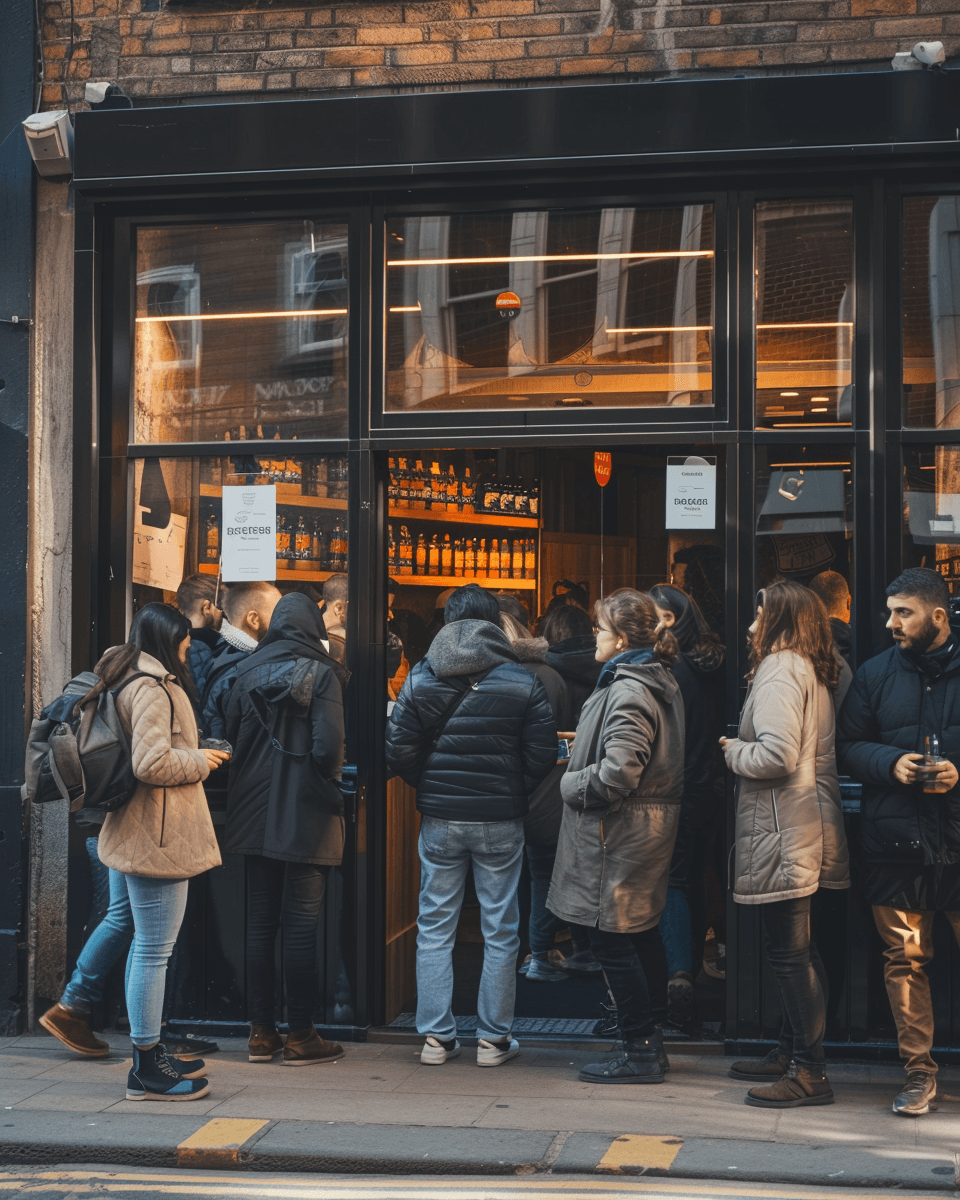
The majority of people who walk into your shop for the first time found you on their phone, within a mile, in the last hour. They searched "coffee near me" or "café open now" and tapped one of the first three results on the map. If you are not in that top cluster, you are invisible to the single largest source of new customers an independent has.
The good news: the thing that decides it is mostly free and entirely in your control. Your Google Business Profile is the most important marketing asset you own, ahead of your website and well ahead of Instagram. To get the most out of it:
- Complete every field. Hours, phone, exact category ("Coffee shop" as primary, not "Café" if coffee is your anchor), attributes (wifi, outdoor seating, vegan options), and a proper description.
- Add real photos every week. Profiles with fresh, genuine photos get materially more clicks and direction requests than stale ones. The flat white, the morning queue, the corner table in good light.
- Post updates and offers. Treat the "Posts" section like a free noticeboard — a new seasonal drink, a Saturday event, your bank-holiday hours.
- Keep opening hours ruthlessly accurate, especially over holidays. Nothing kills a first visit faster than a locked door at a time Google promised you were open.
This one lever, done properly, moves footfall within a fortnight. It is the first thing to fix and the cheapest.
2. Treat reviews as the deciding vote
Once someone finds you, your reviews decide whether they choose you. UK consumers read reviews before trying a new local place as a matter of routine, and both the count and the recency matter as much as the average score. A 4.6 with 240 recent reviews beats a 4.9 with 11 from two years ago.
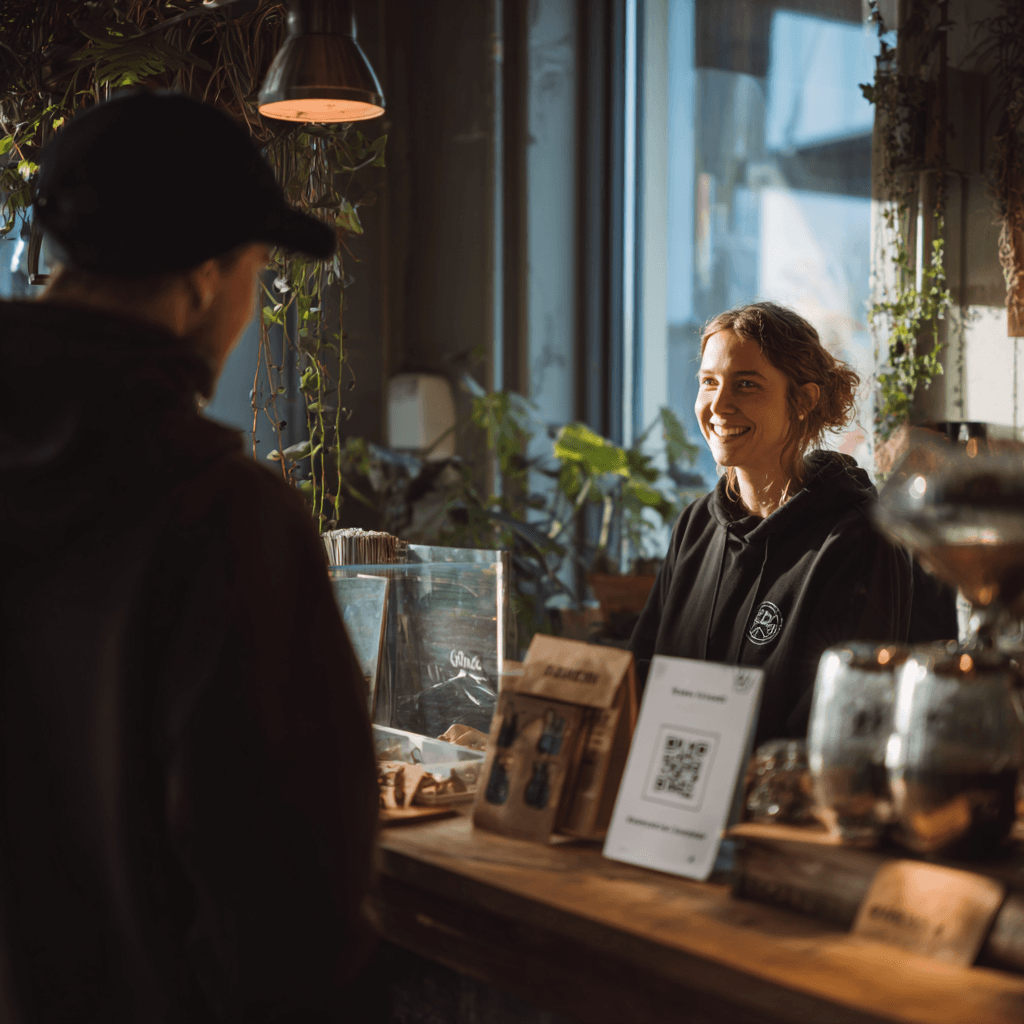
You don't buy reviews, you ask for them — at the moment of maximum goodwill. The regular who just told your barista "this is the best flat white in town" is the person to gently point at a QR code on the counter. Reply to every review, the warm ones and the spiky ones; a calm, human reply to a complaint reassures the next reader far more than a flawless average.
3. Make the first visit turn into a second
You can pour money into being found and chosen, but if the first visit doesn't earn a second, you are filling a leaky bucket. This is the most overlooked lever and the cheapest to pull, because it costs nothing but attention:
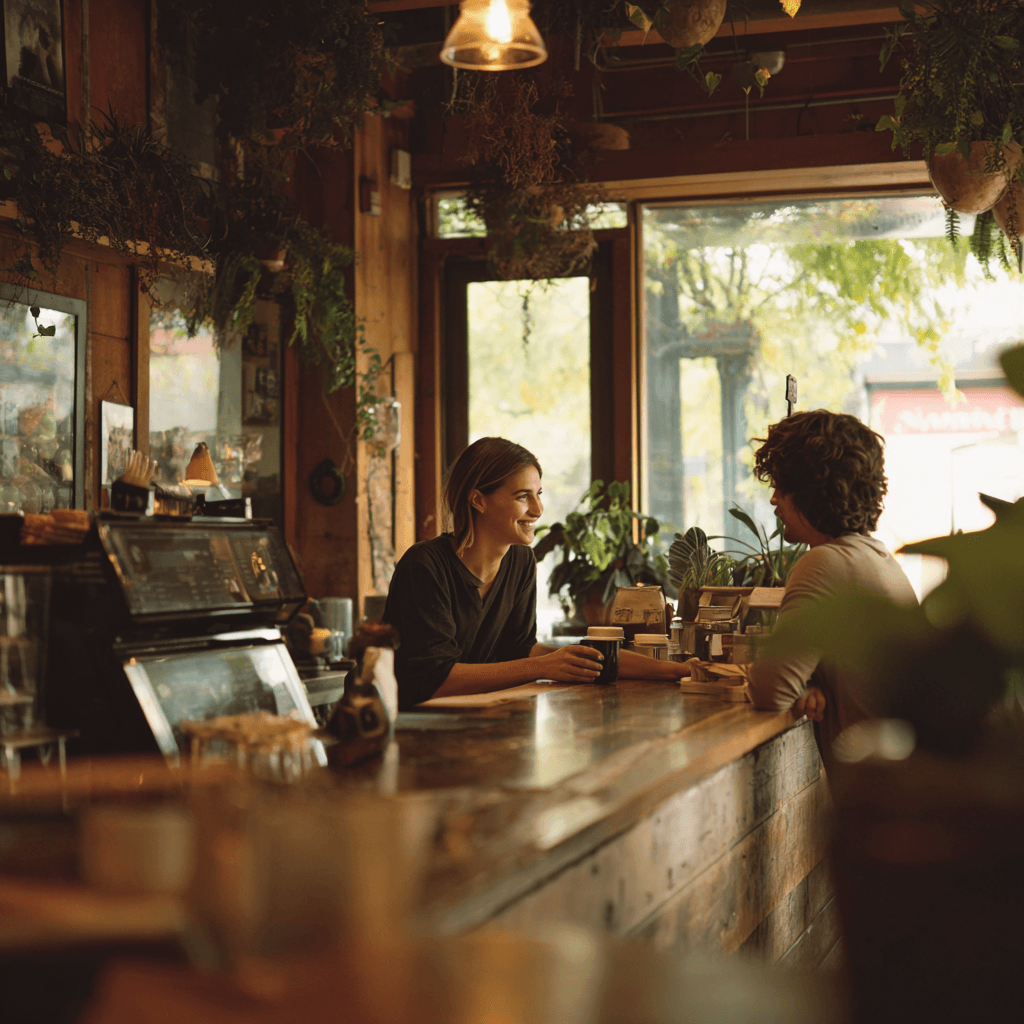
- Learn names and orders. "The usual?" is the most powerful retention tool in hospitality and it has no licence fee.
- Be consistent. A regular returns because the flat white is the same every Tuesday. Inconsistency is the quiet killer of independent cafés.
- Fix the friction. Slow card machines, a confusing queue, no obvious seating — small frustrations that quietly cost you the second visit.
4. Word of mouth, made deliberate
Word of mouth is how most independents actually grow, and you can nudge it rather than wait for it. A referral that costs an existing regular nothing to make — "bring a friend, their first coffee's on us" — converts far better than any advert, because it arrives with a recommendation attached. Local community is the same lever at scale: the running club that finishes outside your door, the nursery pickup crowd, the nearby offices.
5. Local partnerships and events
Independents have one advantage chains can't copy: you can be genuinely of your high street. Partner with the bookshop two doors down for a Saturday morning. Host a local roaster's tasting, a baby-and-coffee morning, a freelancer co-working afternoon on your deadest weekday. Events do double duty — they bring new faces in and give you something to post about on your Business Profile and socials.
6. Social media — useful, but not the whole job
Instagram and TikTok are real channels, but they are the amplifier, not the engine. A sharp, consistent feed of genuine photos and the occasional behind-the-counter video keeps you top of mind for people who already know you and occasionally reaches someone new. Don't let it eat the hours that local search and reviews deserve. For a single-site café, ten good posts a month beats thirty rushed ones.
The problem underneath all of this
Do all six well and you will get more customers through the door. But notice what you've built: a machine that turns effort and weather into footfall, where every pound is earned in the moment and a quiet Tuesday is simply a pound that never existed. That fragility is the real problem, and it's why "more customers" never quite feels like enough — a great week can still be wiped out by a wet fortnight. We worked the numbers on exactly this in the economics of a quiet Tuesday.
The structural fix isn't more footfall. It's converting the footfall you already have into revenue that doesn't depend on the day.
Turn your best customers into members
Your customers already come in. The opportunity most independents miss is to let them pay for the habit upfront: a monthly membership that gets them their daily coffee in exchange for a predictable monthly fee. This is exactly the model Pret and Costa used to lock in their customers, and it's now available to a single-site independent with no technical staff. The structural argument is laid out in full on why memberships.
The maths is what makes it serious. Take a daily-coffee membership at £40 a month and sign up 50 regulars who were already coming in. That's £2,000 of recurring revenue every month, landing the same Monday whether it rains or not. Spread across the month, that's roughly £67 a day of guaranteed contribution before you've served a single walk-in. It doesn't replace footfall; it puts a floor under it. We show how 100 subscribers can cover an independent's rent in the £30k question, and the broader recurring-revenue case in MRR for high-street businesses.
Memberships also quietly improve every other lever on this page. Members visit more often (they've pre-paid, so they want their value), which lifts footfall and the buzz that draws walk-ins. They're your most loyal advocates, so they leave the reviews and bring the friends. And because they sign up with an email, you finally have a contactable list of your best customers, something a stamp card never gave you. The practical playbook is in converting customers to members, and the platform built specifically for UK coffee shops is covered on PerkClub for coffee shops.
What to do this week
- Today: complete every field of your Google Business Profile and add five fresh photos.
- This week: put a review QR code on the counter and brief your team to point happy regulars at it.
- This month: plan one local event on your quietest weekday.
- This quarter: pick your anchor product, set a membership price that comfortably beats your cost of goods, and offer it to the twenty regulars you know best.
Footfall gets you through this month. The floor underneath it is what lets you plan the next one.
Common questions
- How long does it take to get more customers into a coffee shop?
- Quick wins (a fully completed Google Business Profile, fresh photos, and asking happy customers for reviews) start moving footfall within 2 to 4 weeks. Reputation and word-of-mouth compound over 3 to 6 months. The structural fix, recurring membership revenue, can be live in under a day but builds over the first 90 days as you sign up regulars.
- How much should an independent coffee shop spend on marketing?
- Most independent UK coffee shops spend little or nothing on paid advertising and don't need to. The highest-return activities — Google Business Profile, review collection, signage, and staff who pitch — are free or near-free. If you do spend, a modest local boost or a printed run of loyalty signage beats paid social for a single-site café.
- Do loyalty stamp cards actually bring customers back?
- Stamp cards nudge repeat visits but leak badly: cards get lost, fraud is easy, and you learn nothing about who your customers are. A digital membership or subscription captures the same repeat habit, pays you upfront, and gives you a contactable list of your best customers.
- How do I get my coffee shop to show up higher on Google Maps?
- Complete every field of your Google Business Profile, pick the correct primary category, add real photos weekly, post offers and updates, keep your opening hours accurate, and steadily collect reviews with replies. Proximity, relevance, and prominence drive Maps ranking — and reviews plus a complete profile are the levers you control.
- Is a coffee subscription worth it for a small café?
- For a shop with a clear daily product and regular weekday footfall, yes. Fifty members at £40 a month is £2,000 of recurring revenue that lands regardless of the weather — enough to change hiring and ordering decisions, not just the headline number. The maths is in our pillar on covering rent with 100 subscribers.