Short answer
Ask a chain what it would pay for what you already have — a shop where the staff know half the queue by name — and you'll understand why community is worth building deliberately. A multiple can beat you on price, on speed, on app budget and on procurement. It cannot make anyone feel like a local. Community is the one moat that doesn't get cheaper to copy at scale, which is exactly why it should be an independent's favourite ground to fight on. We made the wider case for this in the British high street isn't dying — its business model is.
The problem is that "build a community" is usually offered as a vibe rather than a plan. So here is the plan: the concrete layers, in the order they're usually worth building, with an honest view of what each costs a small team.
Layer one: a recognition culture — the foundation everything sits on
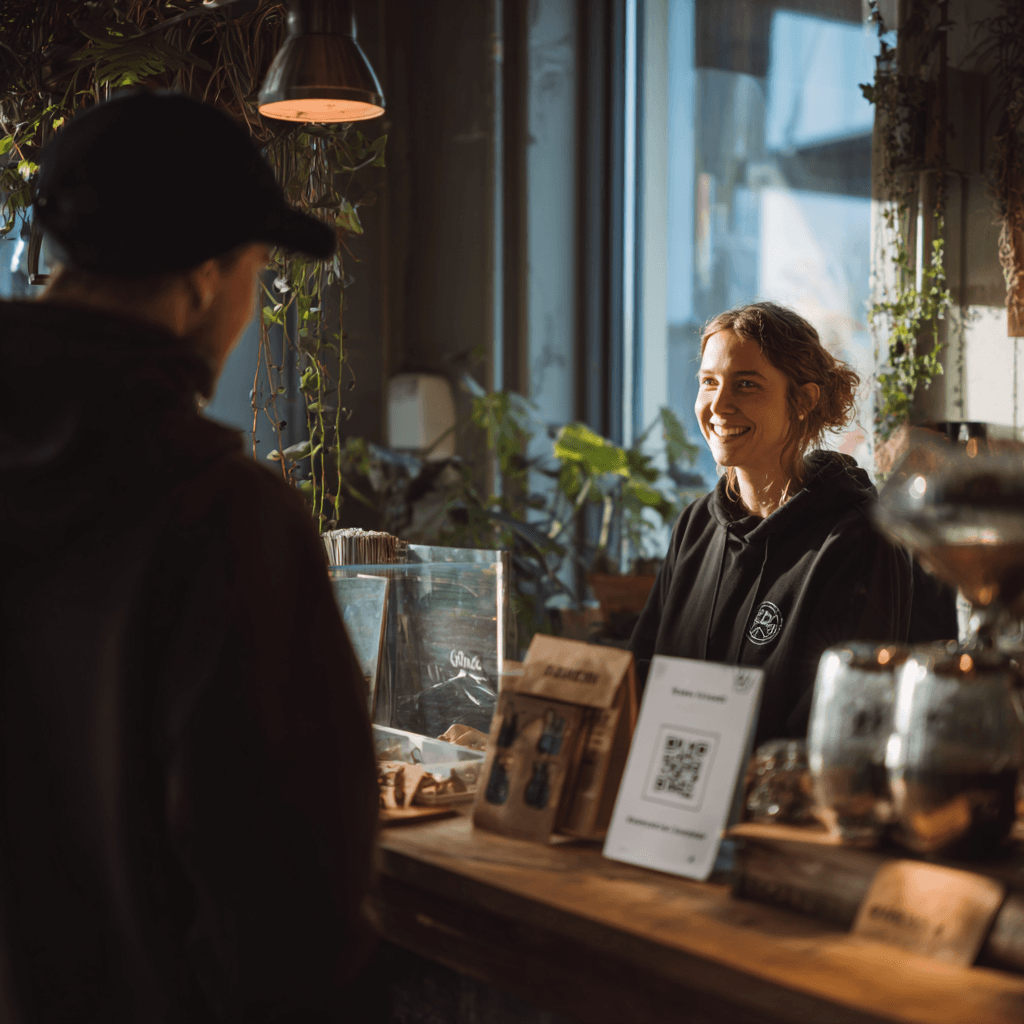
Community starts embarrassingly simply: people are recognised when they walk in. Names, usual orders, the dog, the week they've had. "The usual?" is not small talk — it's the moment a transaction becomes a relationship, and it's something a rota-driven chain structurally cannot deliver. This layer costs nothing but attention, and it's the foundation for everything below, because nobody joins the community of a place where they feel anonymous.
Make it a team habit rather than an owner's talent. Brief everyone to learn the ten most frequent faces. Write the regulars' orders down somewhere shared if memory isn't the team's strength. If this layer is weak, fix it before attempting anything more ambitious — a run club hosted by staff who don't know anyone's name is an event, not a community. The retention mechanics underneath this are covered in how do I get customers to come back?
Layer two: a space that invites people to stay
Sociologists call it the third place — somewhere that isn't home and isn't work, where people can simply be. Independents are natural third places, but only if the room says so. You don't need a refit; you need a handful of honest signals:
- Somewhere to linger. A long shared table does more for community than any loyalty scheme — it manufactures the collisions between regulars that turn parallel customers into people who nod at each other.
- A noticeboard that's actually local. Club flyers, the school fete, a neighbour's dog-walking card. It signals that the shop belongs to the area, not just trades in it.
- An honest welcome policy. Decide what you genuinely want — laptops or not, dogs or not, prams or not — and say it warmly. A clear "yes, stay" beats an ambiguous atmosphere; so does a kind "we're tiny at lunch, laptops til noon."
The test for all of it: would two regulars who don't know each other ever end up talking in your space? If the answer is never, the room is set up for throughput, not belonging.
Layer three: rituals and events — chosen for a small team, not a marketing department
Events are where community advice usually gets unrealistic. You have a small team and no spare hours, so the bar is: repeatable by one person, cheap to run, and worth doing even if eight people come. Rituals beat occasions — a monthly one-off gala builds less than a scrappy weekly fixture, because community forms through repetition.
Honestly weighed, the formats that tend to fit an independent:
| Format | Effort | Cash cost | What it actually builds |
|---|---|---|---|
| Weekly run/walk club (meet, move, coffee after) | Low once launched | Near zero | A self-organising crowd whose finish line is your till |
| Coffee morning / parent-and-baby hour | Low | Near zero | Weekday-morning regulars who become the daytime backbone |
| Tasting or "meet the maker" evening | Medium | Stock + staff hour | Depth — turns interested customers into advocates |
| Charity bake/fundraiser day | Medium | Modest | Local goodwill and press; do it because you mean it |
| Big ticketed one-off events | High | Real | A spike, rarely a community — treat as the exception |
Be truthful with yourself about the economics: most events don't pay for themselves on the night once you count staff time, and pretending otherwise is how owners burn out on them. The return is in what attendees do over the next six months — visit more, bring people, choose you by default. That pattern, where keeping an existing relationship warm outperforms buying a new one, is the same retention economics Bain has documented for decades. Pick one ritual, run it for a quarter, and kill it without guilt if it drains more than it builds.
Layer four: be part of the local web, not an island
Communities cluster around networks, not single points. The florist, the barber, the bakery and the bookshop two doors down all serve your customers already — the only question is whether you're connected to each other or politely ignoring each other. Cross-promotion between neighbouring independents is free and compounds: stock the bakery's brownies and say whose they are, display the barber's cards, do a joint window for the street's summer fair, recommend each other by name.
This matters double when competition arrives. A shop that's woven into its street — partnerships, noticeboard, rituals, names — is dramatically harder to displace than one that merely has good products, a point we develop in a new competitor opened near me — how do I compete?
Layer five: social media as amplifier, not substitute
An Instagram following is an audience; it is not a community. The distinction is worth being strict about, because the algorithm happily eats hours that would be better spent learning names. Used well, social is the amplifier for everything above: it reminds people the Saturday run exists, shows the faces behind the counter, celebrates the regulars (with permission), and lets your community share you to their friends — which is where local discovery genuinely happens, alongside the reviews BrightLocal tracks year after year. Post about the community you have, rather than performing one you don't. Ten minutes after each ritual beats an hour of content strategy.
The problem underneath all of these
Do all of this well and something real forms: people who recognise each other, a ritual or two, a shop that feels like it belongs to its street. But notice what's still missing. Your "community" has no edges and no register — you can't name it, count it, or contact most of it. It's a feeling that lives in the room, invisible on paper, dependent on whoever happens to keep showing up. And feelings, like footfall, wobble: people drift, move, change routines, and the community quietly thins without you ever seeing it happen.
Give the community a name — and a membership
The structural fix is to make belonging tangible: a named club that your best customers can actually join. A paid monthly membership — their regular products or a bundle of genuine perks in exchange for a set monthly fee — does three things that no amount of atmosphere can:
- It gives belonging edges. "Members of the Corner House Club" is an identity in a way that "people who often come in" never is. The card in their wallet — or the pass on their phone — is the physical token of it.
- It tells you exactly who your community is. Every member joins with a name and contact details. Your community stops being a feeling and becomes a list you can welcome, thank, invite and win back.
- It pays you for the belonging you've built. Fifty members at £40 a month is £2,000 of recurring revenue landing on the same day each month — the commercial expression of the community, arriving before anyone walks in.
The perks make the club feel real: members-only tasting nights, first access to the Christmas order book, a members' shelf, the run-club discount. What actually works as a perk is its own craft — we've collected the honest answers in the best perks for memberships, and the underlying economics are in the membership business model. And if you're wondering whether people are tired of subscriptions, the evidence says fatigue applies to streaming apps, not to the corner shop they love — we unpack that in subscription fatigue is real — memberships at the corner shop aren't the cause.
The sequence matters, and it's why this section is last: a membership doesn't create a community from nothing — it crystallises the one you've built with the layers above. Recognition, space, ritual, then the club that names it.
What to do this week
- Today: brief the team on the ten most frequent faces — names and orders. Community starts at recognition.
- This week: make one change to the room that invites lingering — the noticeboard, the shared table, the honest welcome sign.
- This month: launch one low-effort ritual with a fixed weekly slot, and commit to running it for a quarter regardless of turnout.
- This quarter: name the club. Pick the perks your regulars would genuinely value, set a monthly price, and invite the twenty people who already treat your shop as theirs.
A chain can copy your menu by Friday. It cannot copy a room full of people who know each other's names and carry your club's card in their wallet — that part, you build.
Common questions
- Do community events actually make money?
- Rarely on the night, and it's healthier to admit that upfront. A tasting evening or coffee morning usually washes its face at best once you count staff time. The return arrives over the following months: attendees visit more often, bring friends, and default to you when they have a choice. Treat events as retention spend with a long tail, pick low-effort repeatable formats, and stop any that drain the team without deepening relationships.
- How do I start something like a run club or coffee morning?
- Start embarrassingly small and be consistent. Pick a fixed slot — say Saturday 9am — announce it in the shop and on your socials, and run it even if three people show up. Consistency beats scale: a ritual only becomes a ritual through repetition. Keep the format light enough that one team member can host it without notice, because anything that depends on the owner personally will stop the first busy week.
- Isn't social media enough to build a community?
- No — an audience is not a community. Followers watch; a community shows up, knows each other, and feels ownership. Social media is genuinely useful as an amplifier: it reminds people the ritual exists and lets them share it. But the belonging itself is built in the room, between people who recognise each other. If the algorithm changed tomorrow, a real community would still turn up.
- What's the difference between a loyal customer and a community member?
- A loyal customer has a habit; a member has an identity. Loyalty is transactional — they come back because it's good and convenient. Community is relational — they'd notice if you closed, they introduce you to friends as 'my café', and they feel some ownership of the place. The practical difference shows up in resilience: habits break when circumstances change, identities don't.
- Can a paid membership really create belonging, or does it just feel like a subscription?
- The payment isn't the belonging — it's the container for it. A named club with visible perks, a card in the wallet and small members-only moments gives the community edges: you're in it, and you know you're in it. Done lazily it's just a discount scheme; done well, the membership is how an independent makes belonging tangible while also being paid predictably for it.