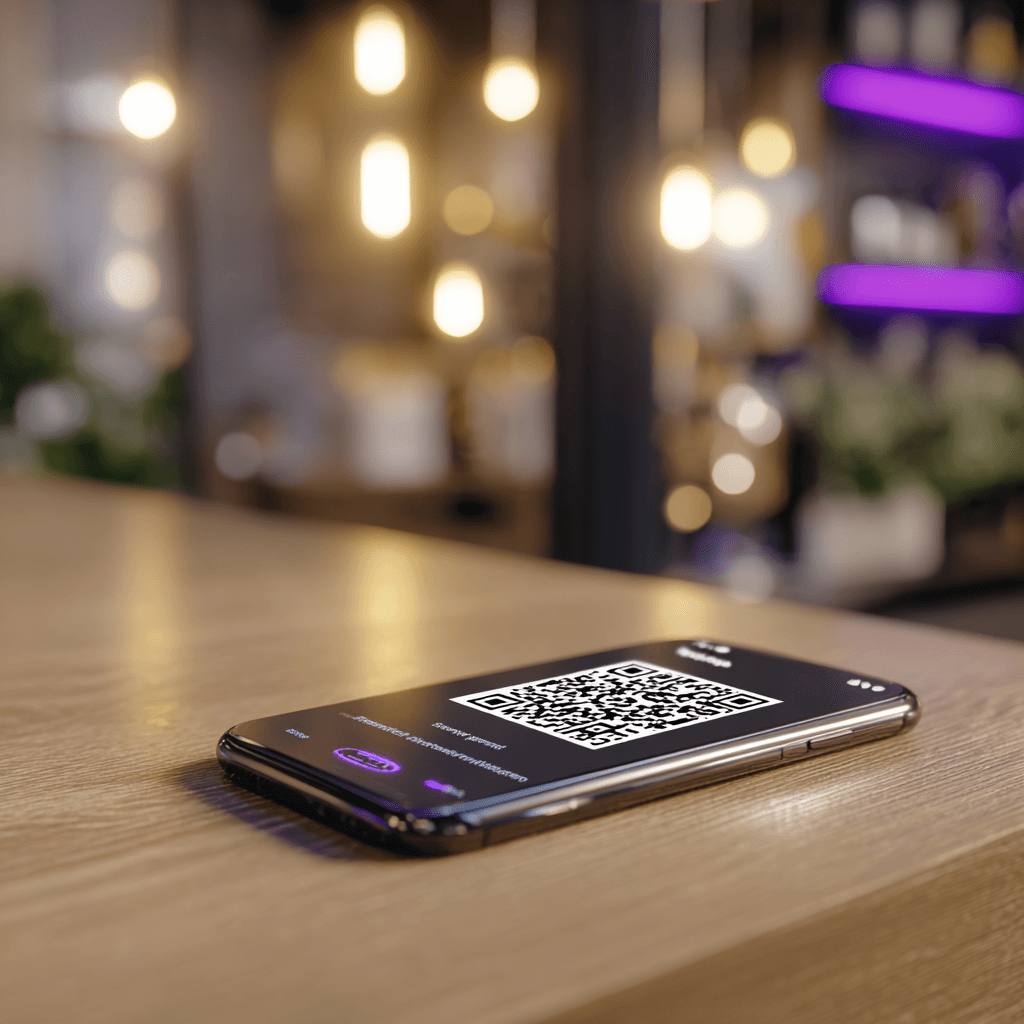
Short answer. Gift cards are moving into the phone wallet because that is where people already keep the things they pay with. Digital gift cards took 52% of the UK gift card market in the first half of 2024, up from 30% in 2019, and UK Finance reports that 57% of UK adults used a mobile wallet in 2024. A gift that lives in Apple Wallet or Google Wallet cannot be left at home, never needs a code read out at the till, and shows the recipient what is left after every visit. For an independent shop, the strongest version is a wallet gift that holds items, such as ten coffees or two haircuts, because the recipient sees a present from a place they know, redeemed in one scan.
Three places a gift card can live
Every gift card ends up in one of three places, and where it lives decides whether it gets used.
In a drawer. The plastic or paper card. It feels nice to hand over, and then it goes into a purse, a coat pocket or the kitchen drawer with the takeaway menus. The recipient has to remember it exists, and remember to bring it, on the day they happen to walk past your shop.
In an inbox. The emailed code or PDF. It arrives instantly, which is a real advantage, but an inbox is a poor place to keep anything. Three weeks later the recipient is at your counter scrolling through emails with a queue behind them, looking for a message from a sender they do not recognise.
In the phone wallet. A pass in Apple Wallet or Google Wallet. It sits beside the bank card the recipient taps a dozen times a week. They cannot leave it at home, they do not have to search for it, and it is two taps away at the exact moment they are standing in your shop.
The first two rely on the recipient's memory. The third does not, and that is the whole argument.
Why the shift is happening now
Two changes have met in the middle.
The first is that gift cards have gone digital. The Gift Card and Voucher Association, the UK trade body, reported that digital gift cards reached 52% of the market in the first half of 2024, overtaking physical cards for the first time. In 2019 the digital share was 30%.
The second is that the phone has become the wallet. UK Finance found that 57% of UK adults used a mobile wallet in 2024, up from 42% the year before. Paying with a phone is no longer a habit of the young or the technical. It is simply how most people pay.
Put those together and the direction is clear. If the gift is already digital, and the recipient already pays with their phone, the natural home for the gift is the wallet on that phone. A code in an email is a halfway house.
What redemption looks like at the counter
This is where the difference is easiest to see. Picture the same recipient, using the same gift, in three different forms.
With a plastic card, staff swipe or key it in, find the balance, take part of the bill from it and ask how the customer would like to pay the rest. If the till and the gift card system are not connected, somebody writes the new balance on the card in biro.
With an emailed code, the customer finds the email, reads out or shows a string of letters and numbers, and staff type it in. If one character is wrong, they start again.
With a wallet pass, the customer opens their phone wallet and holds it up. Staff scan it. That is the entire transaction.
For a PerkClub gift membership, that scan happens on the same kiosk screen staff already use for members, which runs in a browser on whatever device the shop owns. The pass then updates on the recipient's phone to show what is left: nine coffees, then eight, then seven. There is no balance to look up, no remainder to work out and nothing new for the team to learn. We wrote about why we built on wallet passes in the first place in why we built PerkClub on Apple Wallet, not a mobile app, and the same reasoning applies twice over to gifts, because a gift recipient never chose to sign up for anything.
Why items work better than money in a wallet
A wallet pass can hold a cash balance. Several good platforms do exactly that, and for some shops it is the right choice. But the wallet is at its best when it holds the thing itself.
Think about what the recipient sees when they open the pass. On one, a figure: £30.00, then £26.40, then £22.80. On the other, the name of a place they know and what they have been given there: ten coffees, eight left.
The first is money they could have been handed in an envelope. However generous the amount, a number never quite feels like a present. The second is a gift from a particular shop, chosen by someone who knows where they like to go. It reads as "I got you your mornings at the place on the corner", not "here is £30".
It also changes the visits. A balance runs down in awkward amounts and ends with a few pounds nobody bothers to spend. A count of items ends cleanly, and every item is a separate visit. We cover that comparison in full, including the cases where a plain gift card is the better choice, in gift cards vs gift memberships.
What this means for an independent shop
A chain can print cards, rack them in supermarkets and absorb the ones that never get used. An independent has none of that reach, but the wallet evens things up.
- Your gift sits beside the big brands. In the recipient's wallet, your pass has your name, your logo and your colours, in the same stack as their bank card and their train ticket.
- There is nothing to print or post. A wallet gift is delivered by email and added in a tap, so it can be bought at the last minute and still arrive on time.
- You are paid when the gift is bought. The money lands before the recipient has walked through the door.
- Each gift brings in someone new. Many recipients will be people who have never visited. A gift that is easy to find and easy to use is one that actually gets them through the door.
- It leads somewhere. When a gift membership ends, the recipient already has the habit and the pass. Joining as a full member is the obvious next step, and it turns a one-off sale into income that arrives every month.
How to choose a platform for wallet gifts
Whichever platform you look at, four questions sort the options quickly.
- Does the gift become a real wallet pass, or is it a code in an email? Ask to see the recipient's side of it on a phone.
- Does the pass update after each visit? A pass that always shows the starting amount is a picture of a gift card, not a live one.
- What do staff have to do at the counter? Count the steps. One scan is the standard to hold everything else against.
- Can you sell items as well as money? If you want the gift to feel like your shop, you need to be able to put your products in it.
Our comparison of gift card software for UK small businesses goes through eight platforms on these points, with verified pricing for each.
Bottom line
The gift card is following the bank card, the train ticket and the boarding pass into the phone. For an independent shop that is good news: the wallet is the one place where your gift is as easy to find and as easy to use as anything a national chain sells. Put the present itself in it, your coffees or your cuts, and the recipient opens their wallet to a gift from a place they know. If you would like to see how that looks for your shop, start with Gifts or see how PerkClub works.
Common questions
- Can a gift card be added to Apple Wallet or Google Wallet?
- Yes, if the platform that issues it supports wallet passes. The recipient taps an Add to Wallet button in the email that delivers the gift, and the gift then sits in the same place as their bank cards and tickets. Not every gift card platform does this: many still deliver a code or a PDF by email, so it is worth checking before you choose one.
- How does a customer redeem a gift from their phone wallet?
- They open the pass and show it at the counter, and a member of staff scans it. With a PerkClub gift membership the pass carries a QR code, staff scan it on the same kiosk screen they use for members, and the pass updates to show what is left. Nobody types a code, checks a balance or works out a part-payment.
- Do customers need an app to use a wallet gift?
- No. Apple Wallet and Google Wallet are already on the recipient's phone, so there is nothing to download and no account to create with a new app. That matters for gifts in particular, because the recipient did not choose to sign up for anything: the easier the first step, the more gifts get used.
- Are digital gift cards more popular than physical ones in the UK?
- Yes. The Gift Card and Voucher Association reported that digital gift cards reached 52% of the UK market in the first half of 2024, overtaking physical cards for the first time, up from a 30% share in 2019.
- What is the difference between a wallet gift card and a gift membership?
- A wallet gift card is stored money that happens to live on a phone. A gift membership is a set of items or services over a period, such as ten coffees across three months, held on a wallet pass that counts them down. Both sit in the phone wallet; one holds a balance, the other holds the present itself.